In a textile finishing or heat-setting line, the stenter pin plate is a small component that plays an important role in maintaining fabric width, edge stability, and consistent fabric tension.
For textile mills operating Monforts stenter machines, worn or incorrectly selected pin plates can affect fabric handling and finishing quality. Regular inspection and timely replacement can help reduce fabric slippage, edge damage, and unexpected production interruptions.
In this guide, we explain the function of a Monforts stenter pin plate, common wear problems, how to select the correct replacement, and what information should be provided when ordering.
What Is a Monforts Stenter Pin Plate?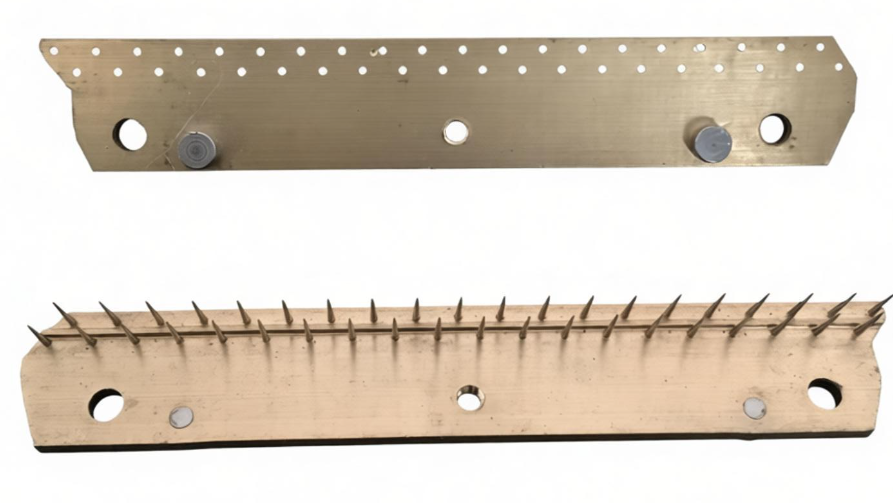
A Monforts stenter pin plate, also called a pin bar or needle plate, is a fabric-holding component installed on the stenter chain or pin assembly.
During textile finishing and heat-setting, the pins engage with the fabric selvedge and help carry the fabric through the stenter chambers while maintaining the required fabric width and tension.
A properly matched pin plate works together with the stenter chain, pin holder, clips, and other fabric-edge control components to maintain stable fabric movement throughout the finishing process.
For Monforts stenter machines, the correct pin plate should be selected according to the machine configuration, existing component dimensions, pin arrangement, and fabric-processing requirements.
Why Is the Pin Plate Important in a Stenter Machine?The stenter pin plate has several important functions during textile finishing.
1. Maintaining Fabric WidthThe pins hold the fabric selvedge while the fabric passes through the stenter machine. Stable pin engagement helps maintain the required working width during heat-setting.
2. Maintaining Fabric TensionConsistent engagement between the pin plate and fabric edge helps maintain stable fabric tension throughout the processing line.
Uneven pinning can contribute to fabric movement or width variation.
3. Supporting Heat-SettingDuring heat-setting, fabrics are exposed to elevated temperatures while being transported through the stenter chambers. The pin plate helps keep the fabric properly positioned during this process.
4. Supporting Stable Fabric Edge ControlThe condition of the pins directly affects how securely the fabric edge is held. Damaged, bent, worn, or contaminated pins may reduce fabric holding performance.
Common Signs of a Worn Monforts Pin PlatePin plates operate continuously and are exposed to mechanical movement, fabric contact, heat, and contamination. Over time, wear can occur.
Textile mills should pay attention to the following signs:
1. Bent or Damaged PinsPins that are bent, broken, or deformed may not engage the fabric correctly.
2. Uneven Pin HeightIf the pins are no longer at a consistent height or position, fabric holding may become uneven.
3. Fabric SlippageFabric slipping from the pinning system during operation can be a sign that the pin plate or related components require inspection.
4. Increased Fabric Edge DamageDamaged or incorrectly aligned pins may increase the risk of marks or damage around the fabric selvedge.
5. Unstable Fabric WidthIf the fabric width becomes difficult to control, the complete pinning system should be inspected, including the pin plate, pin holder, chain, and related components.
How to Choose the Correct Monforts Stenter Pin PlateChoosing a replacement pin plate based only on the brand name is not always sufficient.Before ordering, textile mills should check several important specifications.
Machine Brand and ModelFirst confirm that the component is intended for the correct Monforts stenter machine and machine configuration.
Pin ArrangementDifferent applications may require different pin arrangements, pin counts, pin spacing, or pin dimensions.
Plate DimensionsThe overall length, width, thickness, mounting-hole position, and other critical dimensions should be checked against the existing component.
Pin Material and Surface TreatmentPin material and surface treatment can affect wear resistance and service life.
For example, our Monforts pin plate product uses carbon steel needles with copper-nickel plating for the pin section. The exact material and treatment should always be confirmed according to the required specification.
Existing Sample or DrawingWhen there is uncertainty about the correct replacement, providing an existing pin plate, technical drawing, or clear photographs with dimensions can make identification much easier.
Monforts Pin Plate and Other Stenter Spare PartsThe pin plate does not operate independently.
A complete stenter fabric-edge control system may include:
Wear in one component can sometimes affect the performance of other components.
For example, a worn stenter chain may affect the movement of the pin assembly, while a damaged pin holder may prevent the pin plate from maintaining its correct position.
For this reason, when replacing a Monforts pin plate, it is useful to inspect the surrounding components at the same time.
How Often Should a Monforts Pin Plate Be Replaced?There is no universal replacement interval for every Monforts stenter machine.
Service life depends on factors such as:
- Machine operating hours
- Fabric type
- Production speed
- Processing temperature
- Fabric tension
- Cleaning and maintenance practices
- Pin plate material and design
- Condition of the stenter chain and pin holder
Instead of replacing pin plates only according to a fixed schedule, textile mills should regularly inspect the condition of the pins and monitor changes in fabric handling and finishing quality.
Maintenance Tips for Monforts Pin PlatesRegular inspection can help identify problems before they cause production interruptions.
Keep the Pin Area CleanRemove accumulated fibers, dust, oil, and other contamination from the pinning area according to the machine manufacturer's maintenance procedures.
Inspect Bent or Broken PinsCheck the pins regularly for deformation, breakage, or unusual wear.
Check Pin AlignmentUneven or misaligned pins may affect fabric holding and should be investigated promptly.
Inspect Related ComponentsWhen checking the pin plate, also inspect the pin holder, stenter chain, clips, and other components connected to the fabric-edge control system.
Keep Replacement Parts AvailableFor textile mills running continuous production, keeping critical stenter spare parts available can help reduce downtime when unexpected wear occurs.
Why Choose a Replacement Monforts Pin Plate?A suitable replacement pin plate should provide accurate dimensions, stable pin positioning, and reliable performance under the operating conditions of the stenter machine.
At Winwell, we supply stenter machine spare parts for textile finishing equipment, including Monforts pin plates, stenter chains, pin holders, clips, brush wheels, and other related components.
Our Monforts pin plate can be supplied according to the required machine configuration, dimensions, sample, or technical drawing. Samples and customized specifications can also be discussed for specific applications.
What Information Should You Send When Ordering?To help us identify the correct Monforts stenter pin plate, you can provide:
- Monforts machine model
- Existing pin plate photo
- Overall dimensions
- Pin count and pin spacing
- Mounting-hole dimensions
- Technical drawing, if available
- Fabric application or machine working conditions
If you are unsure about the exact specification, a clear photo together with several key measurements can help us check the suitable replacement.
ConclusionThe Monforts stenter pin plate is an important part of the fabric-edge control system in textile finishing and heat-setting operations.
Regular inspection of pin condition, alignment, plate dimensions, and related components can help textile mills maintain stable fabric handling and reduce unexpected production problems.
When replacing a Monforts stenter pin plate, do not select a component based only on appearance. Machine model, dimensions, pin arrangement, mounting position, and material should all be considered.
If you need a replacement Monforts pin plate / pin bar, send us your machine model, drawing, dimensions, or photos. We can help check the required specification and provide a quotation.
Need a Monforts Stenter Pin Plate?Contact Winwell with your existing part photo, drawing, or dimensions for compatibility checking and quotation.

